Musicality and connection
Rhythm and Connection in Bachata: Listening to Music and Your Partner
Simple ways to build musicality, communicate without words and practise bachata with care, clarity, respect and confidence.
Dino Dance Academy · · 4 min read
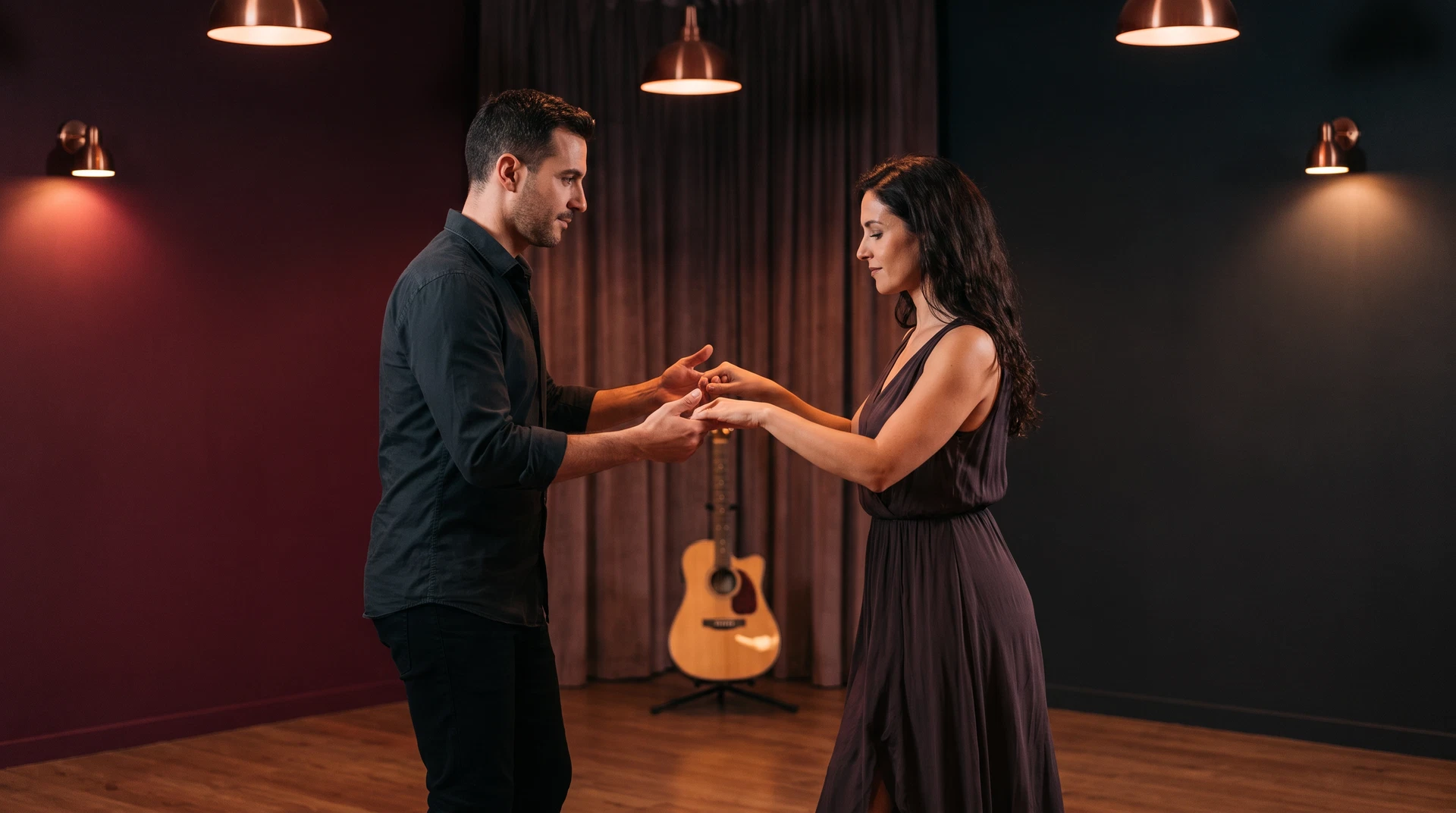
Musicality in bachata is not the ability to add complicated accents all the time. It is noticing where the music breathes and letting your step answer that feeling. Partner connection works in much the same way: it starts with attention, not force.
Good practice can be very simple. A few minutes of listening, a small basic step and an honest conversation about comfort can gradually make your dancing more expressive without losing respect for the person beside you.
Listen to the whole musical picture first
Before you count, listen to the song as a whole. Notice the voice, guitar pattern, bass, bongos and güira. You do not need to name every instrument perfectly; simply observe what changes between verse and chorus, and where the energy becomes lighter or denser.
Then choose one layer for practice. Walk the basic step while listening to the bass, and next time let the step answer the guitar. If your attention wanders, return to the steady pulse. Musicality grows from clear listening, not from collecting more figures.
Make the step a conversation, not a monologue
In a partnership, a signal should be clear enough to understand and soft enough to receive. Leading can begin with the direction of the body and a weight shift rather than the arms. Following is not passivity: the partner listens, responds through balance and can take time before the next decision.
Leave room for pauses. Do not fill every beat with a new figure when the music is asking for simplicity. One calm basic cycle in which both people feel balanced creates a stronger connection than a rushed sequence of movements.
Respect is part of technique
Ask before a dance and accept the answer without persuasion. While dancing, notice distance, comfort and the space around you. Close contact should never be assumed, and agreeing to one dance is not agreement to every later movement. If your partner becomes tense or steps away, reduce the intensity and make room.
Care also includes the other couples on the floor. Large travelling movements, sharp turns or lifts can be risky in a crowded room, so choose movement that suits the circumstances. Awareness makes the floor more spacious for everyone, not less expressive.
Three short exercises for regular practice
You do not need a long rehearsal. Work on one skill at a time and finish before fatigue makes your body compensate. Instead of rating yourself, write down one specific observation: which sound helped you find the pulse, where balance disappeared or when movement became easier.
If you practise with a partner, change roles or agree that today you are exploring only the quality of the signal. This removes the pressure to perform correctly and brings attention back to the conversation between you.
Expression arrives through clarity
Expressive dancing does not have to be loud. When your feet stay with the music, your torso is not fighting for balance and your partner understands your intention, even a small accent has presence. Returning to the basic step is not going backwards; it is a way to hear the composition again.
Let your style develop gradually. First find a steady pulse and reliable support, then add pauses, direction or texture. Elegance can grow from precision and care rather than from the wish to impress at any cost.
Rhythm and connection meet when nobody is trying to shout over the music or the partner. Listen a little more closely, move a little more clearly, and the basic step will reveal far more than it first seems to hold.