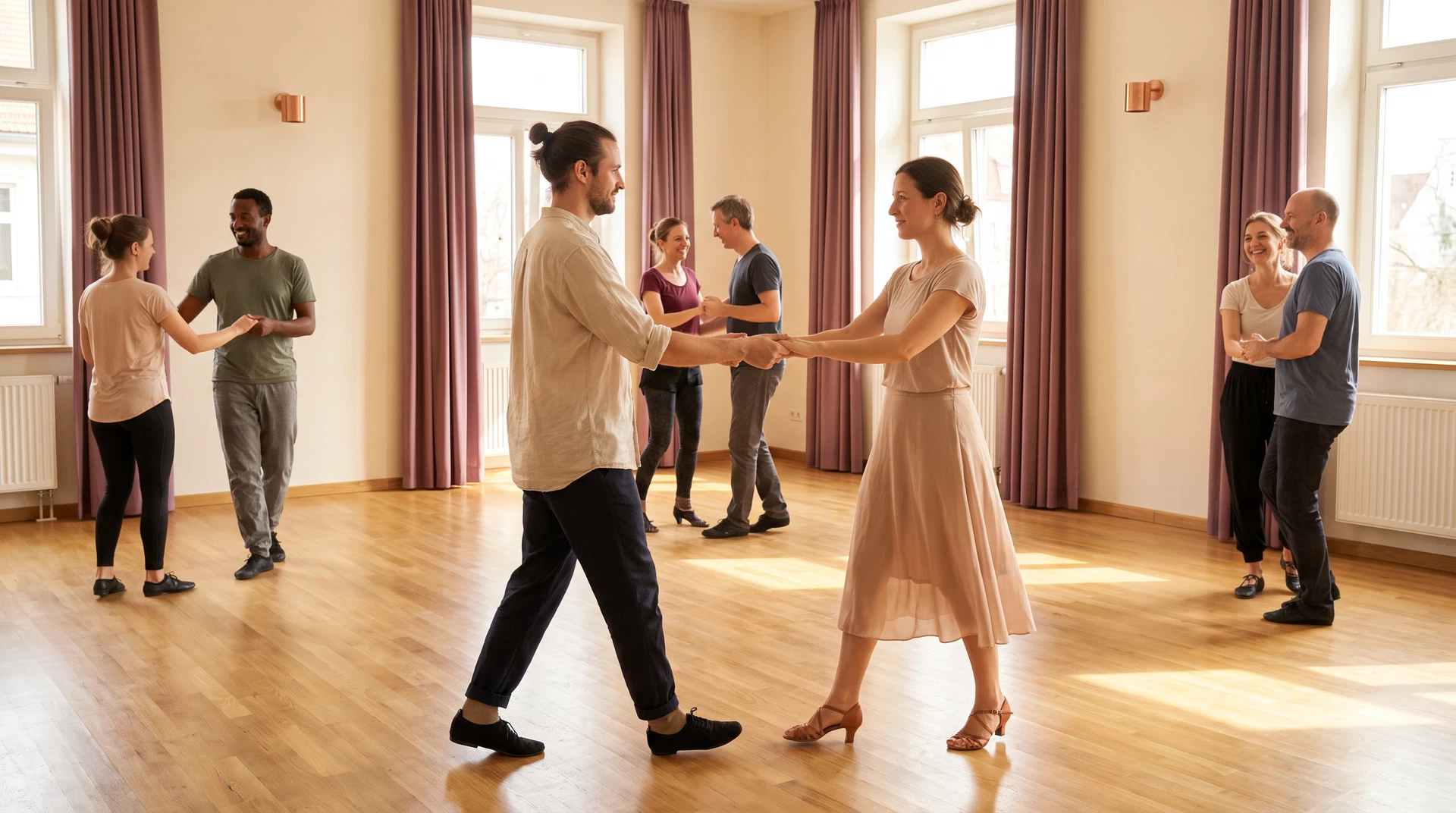
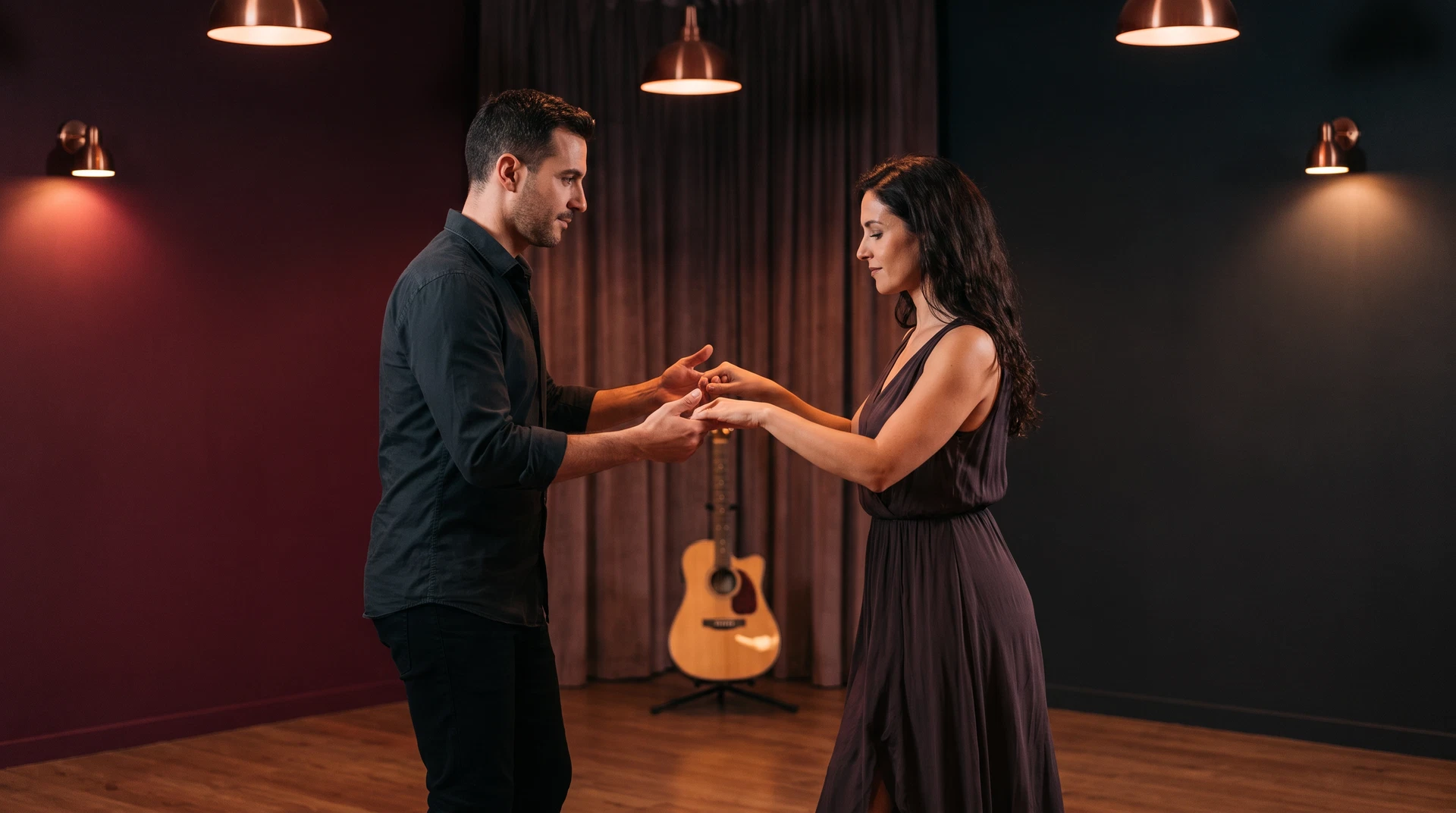
Bachata history
Bachata: Dominican Roots, Social Connection and Living Memory
How bachata grew from Dominican gatherings, guitar-led music and shared movement — and why its meaning is still felt through the body.
Dino Dance Academy · · 4 min read
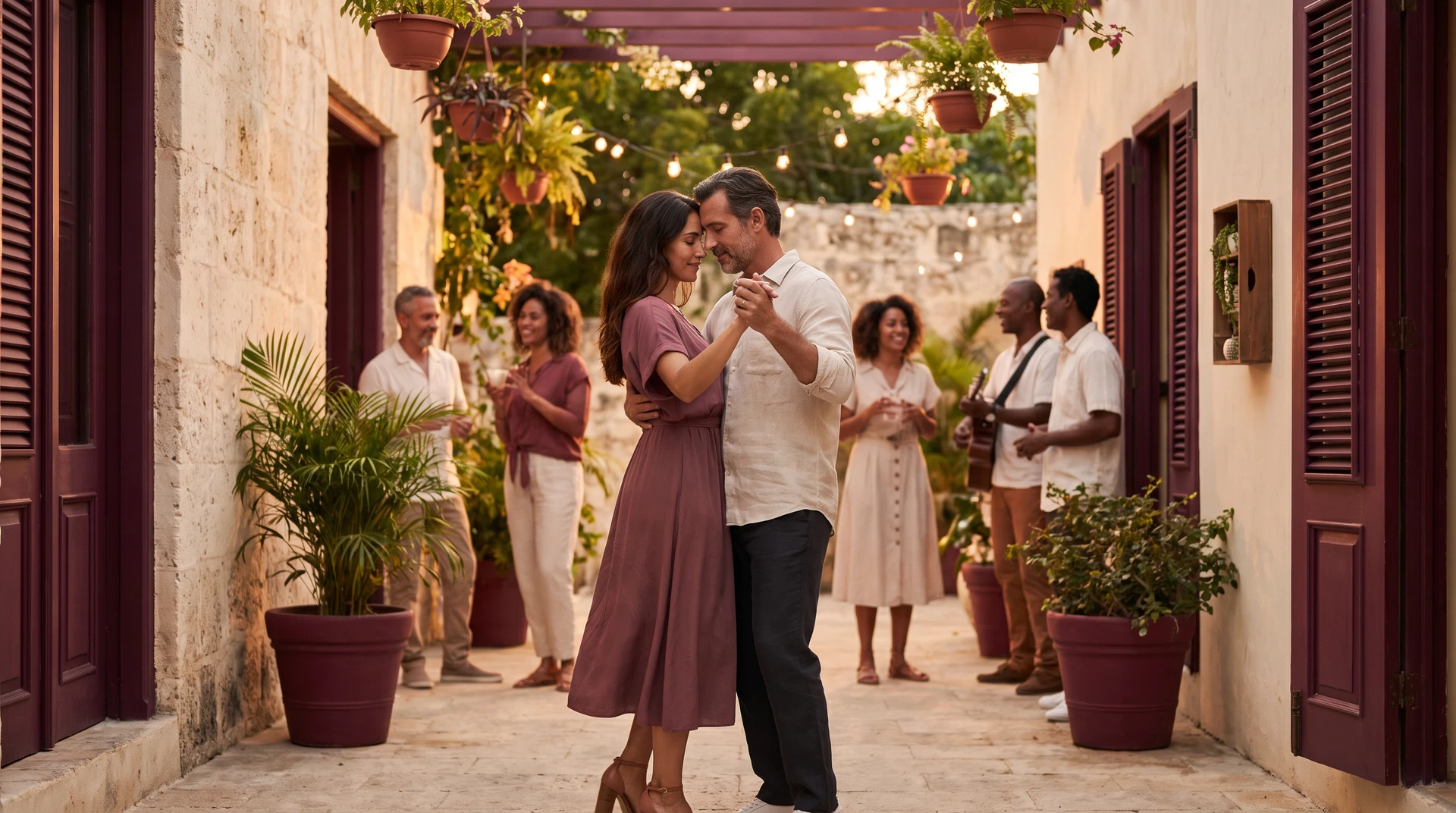
Bachata begins not with an impressive figure, but with a very human wish to be together with music. Its movement is a conversation: the guitar answers the voice, one step answers another, and partners listen without rushing.
Knowing where it came from helps us dance it with care. Bachata’s history is not a museum label; it explains why sociability, closeness and respect matter alongside technique.
A Dominican beginning without tidy myths
Dominican bachata developed in the Dominican Republic as the music and dance of communities. UNESCO describes its relationship with rhythmic bolero and Afro-Antillean genres, including son, cha-cha-cha and merengue. It is not one frozen formula, but a living tradition shaped through performance and people meeting one another.
That is why careful wording matters. The origin of the word bachata has more than one explanation; it is associated with a lively gathering or party, and a possible African root should not be presented as an absolutely settled fact. Cultural history becomes more truthful when it leaves room for nuance.
Music you can see in the step
In the traditional sound, you can hear a small ensemble: guitar, bass, bongos and güira alongside the voice. These timbres do more than decorate the song; they give movement a direction. Listen for the guitar’s pattern and the bass’s weight, and the basic step begins to feel less like a mechanical count.
The teaching count 1-2-3-tap, 5-6-7-tap can be a useful guide in class, but it is not a law. In Dominican practice, a dancer may begin away from the first beat. Feeling the pulse, hearing changes in energy and returning to simplicity when the music becomes busy matter more than clinging to one starting rule.
Social dance is a shared decision
Bachata comes alive between people. Open or closed position, distance and the size of a movement can change according to both partners’ comfort. Leading does not mean pulling, and following does not mean guessing every move: partners exchange clear, gentle information.
An invitation to dance is a request, not a demand. A no should be accepted calmly; silence should never be treated as consent. One dance is not automatic permission for every figure, contact or degree of closeness. This attention does not remove spontaneity; it makes room for spontaneity to be safe.
Closeness is not the same as romance
Calling bachata a romantic dance is too narrow. Its songs often touch on love, longing and memory, but closeness in social dance is first of all the attentive coordination of two bodies. It can be warm and elegant without defining a personal relationship between the dancers.
In class, that means practising a few simple habits: check comfort, leave enough room to move, and do not impose large or risky figures. A small movement made with good listening is often more expressive than a difficult trick performed without connection.
Keeping bachata’s living meaning in class
Start with the music rather than the wish to look experienced immediately. Listen to a few songs, notice the guitar pattern and bass, then walk the basic step with small movements. Technique can grow from a culture of listening instead of becoming detached from it.
Stay curious about different ways of dancing, too. Bachata can be tender, grounded, restrained or playful, but rhythm, reciprocity and respect remain at its centre. Learning the dance is not copying an exotic image; it is entering a tradition’s conversation with attention.
When you hear in bachata not only a count but voices, instruments and human gatherings, every simple step gains depth. That is how social dance stays alive: through listening, choice and the pleasure of being present together.